
Two automation freelancers sell the same service. One pitches: "I build n8n workflows, my rate is X." The other says: "Every new lead gets a response within one minute, automatically — if we don't hit that in 30 days, you don't pay the second month." Same skill, same hours, wildly different close rates. The difference isn't talent — it's that one sold a task and the other sold a transformation with the risk removed.
Most technical people undersell not because they lack skill but because they never learned to package it. The engineering is done; the offer is sloppy — a feature list, an hourly rate, and a hope. Then selling feels awkward, because pitching features to a stranger is awkward.
This post covers the two halves that fix it: building an offer the buyer can't easily compare to anything else, and running a sales conversation that's mostly questions. Both halves now have AI assistance — research, drafting, and a sparring partner that plays the skeptical prospect before any real call happens.
Build an irresistible offer by selling the transformation, not the task: state a specific promised result, remove buyer risk with a guarantee, solve pre-purchase fears as free bonuses, and frame the cost of inaction instead of fake urgency. Sell it through consultative questions — context, motivation, vision, obstacles — then mirror the buyer's own words back before presenting your method, and close by booking the next step. Use AI for prospect research, personalized outreach drafting, and objection practice against a skeptical simulated buyer.
The Offer: Transformation, Not Task
A feature list invites comparison shopping. A transformation invites a decision. Four elements make the difference:
The promise. Not "I provide workflow automation" but "every lead answered within one minute, every invoice chased automatically, your Sunday evenings back." Name the destination, not the vehicle. The buyer should recognize the after-state you're describing.
The guarantee. Move the risk from their side of the table to yours: "If we don't hit the agreed metric in 30 days, month two is free." You can only offer this when you know your delivery works — which is exactly why it builds trust. Weak providers can't afford guarantees; that's the signal.
Strategic bonuses. Find the fear that stops the purchase and neutralize it for free. Worried the pipeline breaks? "Includes a monitoring dashboard and a 24-hour fix SLA." Worried their team won't use it? "Includes a recorded team walkthrough." The bonus kills the exact objection, not a generic discount.
Internal scarcity. Skip fake countdown timers. Ask the real question: "What does another six months of this problem cost?" If slow lead response loses them five customers a month, the delay is more expensive than your fee — and they do that math themselves, which lands harder than any timer.
Pricing: Three Tiers and One Anchor
A single price forces the buyer to evaluate you in a vacuum. Three tiers fix the frame:
| Tier | Role | Typical shape |
|---|---|---|
| Anchor | exists to make Prime look reasonable | premium done-for-you, 3–5x |
| Prime | where you want them | the core result, monthly retainer |
| Entry | catches the not-ready-yet | DIY template + guide |
Underpricing is its own trap — it attracts the clients who haggle hardest and respect the work least. Price against the value of the problem (what missed leads cost monthly), not your hours, and let the anchor do the reframing.
Finding Buyers: The Research Engine
The outreach game has changed: generic blasts are invisible, and genuine personalization scales because research scales.
- Define the ideal customer. Let a model interview you until it can state your target's industry, size, and pain in one sentence. If it can't restate your ICP crisply, neither can you.
- Prospect against criteria. Scan for businesses visibly experiencing the problem — their public reviews complaining about slow responses are a qualifying signal, not just noise.
- Research before writing. For each prospect, pull the specific: recent post, visible problem, company detail. The message references something only their business could trigger.
- Warm network first. Before strangers, contact people who already know you. Trust is pre-installed; conversion is an order of magnitude easier.
The draft template keeps you honest:
Draft a 60-word outreach message. Reference their <specific recent
thing>. Name the <problem pattern> visible in their industry in one
concrete line. Offer one insight, not a pitch. End with a
low-friction question. No superlatives. Mark unknowns [NEEDS: ...].
A human reads and sends every message — the machine handles the research assembly, not the relationship.
The Sales Conversation: Questions as the Pitch
Selling a transformation means the buyer has to narrate their own problem before your solution makes sense. Think of it as a staircase — each step earns the next:
- Preparation. Before the call, research their role and industry so you speak their dialect. Five minutes of AI-assembled context beats an hour of improvising.
- Context. "What are you trying to hit this year, and how long has this been on the list?" People trust listeners.
- Motivation. "Why fix this now?" When they answer, they state their own reasons for change — far more persuasive than yours.
- Vision. "A year from now, working perfectly — what are you celebrating?" Their exact words become your spec.
- Reality. "What's actually in the way?" Document the obstacles in their language.
- The mirror. Only now present anything: "You want [their words], and [their obstacles] are in the way — did I get that right?" When they say yes, your method lands as a custom fit, because they co-wrote it.
- The close. Agreement first, logistics second: "It sounds like the fit is there — want me to hold a start slot for next month?" One question, one next step.
The sequence matters because steps 2–5 are doing the selling; step 6 is just the receipt.
The Sparring Partner
Before any of this faces a real buyer, practice against a hostile simulation:
Roleplay a skeptical operations manager at a 30-person logistics
company. You've been burned by an automation vendor before, you
think this is expensive, and your default answer is no.
I will present my offer; you push back realistically, at least
three times, before showing any interest. Then critique my
answers: where did I pitch instead of ask?
Run it until the objections stop rattling you. The model never gets tired of round seven, and every mistake made in simulation is one you don't make live. Transcribe locally if you're practicing with real client details in the script.
Frequently Asked Questions
What's the difference between a passion and a problem?
A passion is what you enjoy; a problem is a pain someone pays to remove. Businesses compound when they sit where your genuine skill intersects a documented, expensive problem. Passion alone builds hobbies; pain plus skill builds pipelines.
Why sell the result instead of the work?
Because the buyer can't comparison-shop a result the way they can shop hours or features. "Invoicing chased automatically, zero Sundays" is a destination only you're proposing to reach in your specific way — the task list underneath is your implementation detail, not your product.
Isn't a guarantee risky?
Only if your delivery doesn't work yet — which is the diagnostic value: you earn the right to guarantee after the first successful deliveries. Scope it sanely (a named metric, a defined window) and it becomes your strongest trust signal, not a liability.
How do I handle "I need to think about it"?
It's usually an unnamed fear, not a scheduling issue. Ask: "What specifically worries you about moving forward?" Then answer that — with a guarantee, a bonus, or honesty about the boundary. The staircase taught you their vocabulary; use it.
Wrap-Up
The service sells when the offer transforms: promise a destination, carry the risk, bonus away the fears, and price the problem's cost instead of your hours. The conversation closes when it's mostly questions — context, motivation, vision, obstacles — and your method arrives as a mirror of their own words. Research and drafting scale through AI, and the skeptical-prospect simulation polishes you before the stakes are real. Build the offer this weekend; practice the staircase tonight.
Related posts
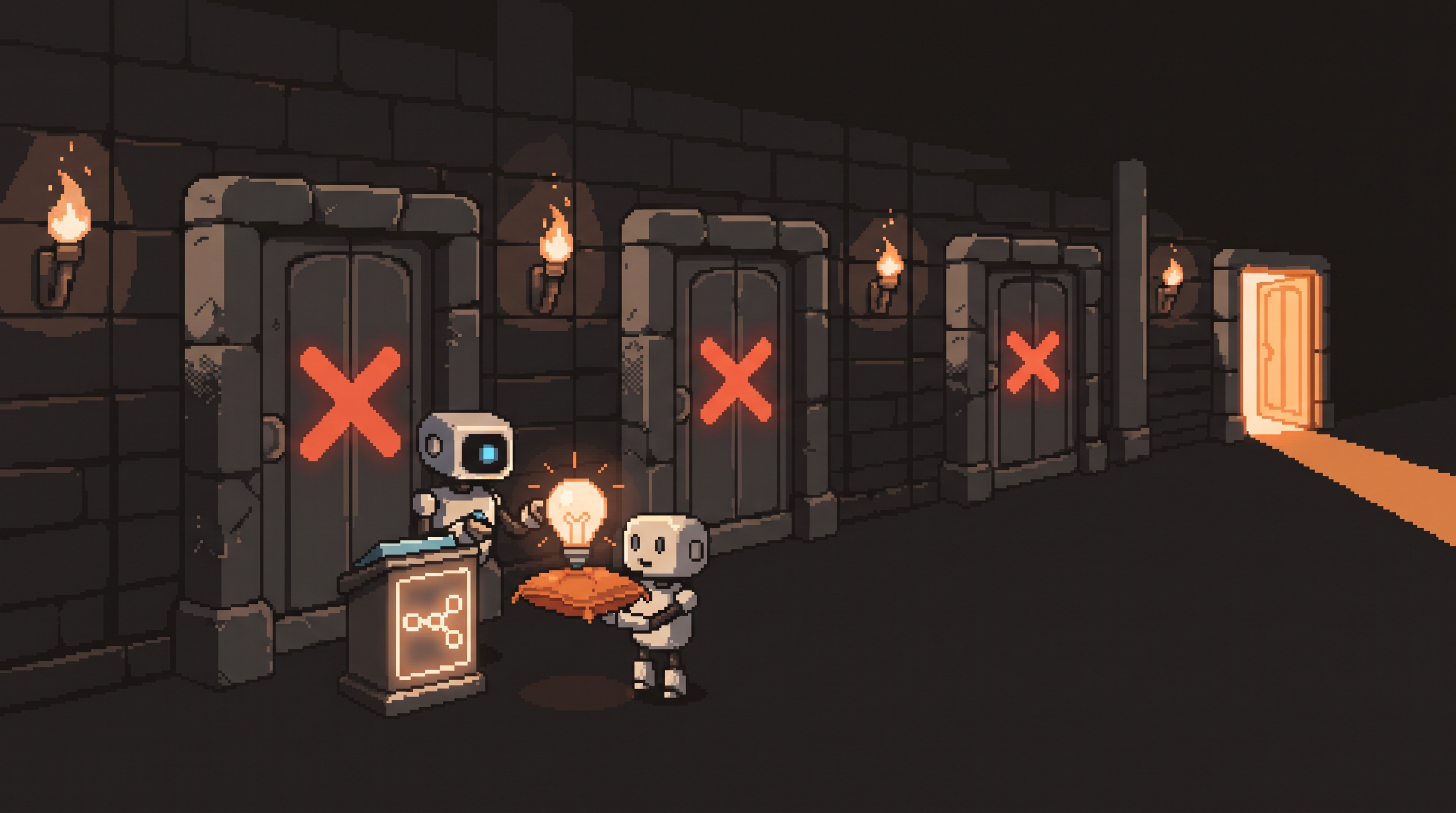
Four Gates: Validating a Business Idea With AI Before You Build
"Is this a good idea?" gets you a cheerleader. Run four kill-oriented gates against live market data instead — fail one, stop.

Sell the Boring Thing: Turning Automation Expertise Into Paid Offers
The automation work that feels routine to you is an emergency to someone else. Package it as a fixed-price result and sell it.
The AI Business Roadmap: Earn, Build, Expand, Commit
Why sequence beats the big idea: earn skills through consulting, build a brand from real cases, expand into scalable offers, then commit to one — plus the deployment-gap goldmine.